Commercial Transformation Index · Domain 10 of 10
Automation
Commercial automation is how intelligently repetitive movement, triggers and system connections reduce manual dependency without reducing visibility. It covers what is automated and why, whether the process was defined before it was automated, who owns each connection and the meaning of the data it moves, and whether failure surfaces to a person quickly rather than being discovered by a customer.
Automation is the only one of the ten commercial domains that multiplies rather than adds. Applied to a governed process it compounds capability. Applied to one that was never defined it compounds the error, faster and with less visibility than a person would, which is why the time saved so often reappears as time spent checking.
Defining the process, naming an owner and making failure loud is what separates the two outcomes. The Commercial Transformation Index assesses automation as a layer over the commercial system, and reads its condition against the reliability of whatever it is automating.
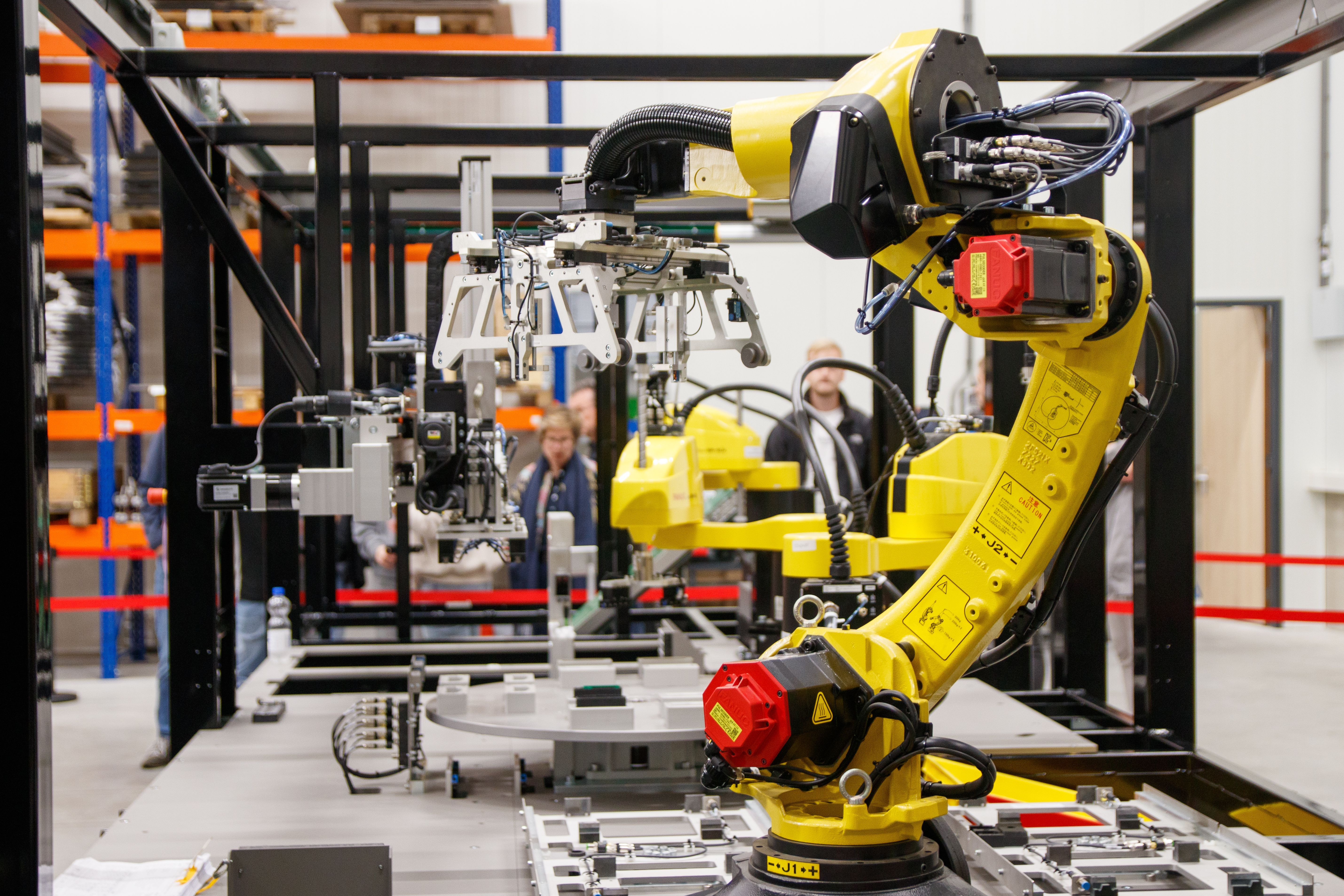
An animated diagram of manual handoffs becoming autonomous workflows. A trigger enters a network and activates a condition, an action, a system update, a notification and a next action in sequence, propagating across three systems with progressively less manual intervention.
Why Automation matters commercially
Automation is the only domain that multiplies rather than adds.
Applied to a governed system it compounds capability; applied to an ungoverned one it compounds the error, faster and less visibly.
Recognising the problem
When to pay attention to Automation.
These are the commercial situations that most often turn out to be a question about Automation rather than the problem they first present as. None of them is diagnostic on its own. Several of them together usually are.
- Automations exist and nobody can say what currently runs.
- A workflow failed silently and a customer found it first.
- Integrations move data between systems and nobody owns what it means on arrival.
- A process was automated before anybody agreed what the process was.
- The time saved by automation reappeared as time spent checking automation.
- The person who built the workflows has left and the knowledge left with them.
- Adding a new system means rebuilding connections nobody documented.
- AI has been applied to commercial data that was already unreliable.
What CTI looks for
What weaker and stronger Automation capability looks like.
Commercially observable characteristics, at a public level. These are not Commercial Transformation Index criteria, anchors or scoring, which stay proprietary. Neither column is a score: capability is a state a commercial system is in, not a verdict on the people running it.
Where capability is weaker
- Automations exist but nobody can say what runs, or what happens when one fails.
- Integrations move data without anyone owning what it means on arrival.
- Automation was applied to a process that was never defined.
- Silent failure is discovered by a customer rather than by monitoring.
Where capability is stronger
- What is automated, and why, is documented and owned.
- Failures surface to a person quickly.
- Process is defined before it is automated.
- Automation reduces manual dependency without reducing visibility.
What CTI examines
The commercial evidence CTI examines in Automation.
The Commercial Transformation Index examines automation as a governed capability layered over the commercial system, and reads its condition against the condition of what it is automating. These are the public capability areas it covers.
-
Automation inventory
Whether the organisation can state what runs, on what trigger, and what it changes.
-
Ownership
Whether each automation and integration has a named owner responsible for it continuing to work.
-
Process readiness
Whether the process was defined, agreed and stable before it was automated.
-
Failure visibility
Whether a failure surfaces to a person quickly, or waits to be discovered downstream.
-
Data meaning at boundaries
Whether somebody owns what a field means when it arrives in the receiving system.
-
Change management
What happens to existing automations when a process, a system or a team changes.
-
Dependency concentration
Whether the understanding of what is automated sits with the organisation or with one person.
-
Visibility retained
Whether the organisation can still see what is happening in a process once it stopped doing it manually.
Every capability area above is published because it is the part you can act on without CTI. What stays proprietary is the assessment engine behind them: how each area is examined, how an answer resolves, and how readings combine into a score. That separation is what makes two assessments comparable to each other, and it is set out in full in the published methodology.
Inside the connected system
What Automation depends on, and what it affects.
The Commercial Transformation Index (CTI) assesses these relationships directly rather than inferring them by comparing one domain reading against another. That is what lets a finding say which weakness is holding another in place, instead of reporting two weak domains and leaving you to guess which one to fix first.
What constrains it
Automation depends on CRM, Marketing, the Website, Sales, Operations and Retention and Customer Success, because it acts on all of them. Its ceiling is set by the reliability of the data and the definition of the process underneath it, so automating while either is weak distributes that weakness at machine speed.
What it constrains
The same six domains are what automation changes. It does not feed one of them and sit between two others. It runs across the commercial system, which is why its effect shows up in the speed and reliability of everything it touches rather than in any one place.
Where the weakness shows up instead
Automation is the only domain whose weakness can make every other reading worse without changing any of them. A broken workflow makes a good process look inconsistent, a silent integration failure makes a reliable record look wrong, and an automation applied to a process nobody defined turns a manageable problem into a distributed one.
This domain
Assessed as a layer across the commercial system rather than as a stage between two domains, which is why it connects in both directions to most of it
Depends on
- CRM
Where commercial truth is supposed to live.
- Marketing
How relevant demand is created and captured.
- Website
What the market, and increasingly the machine, can see.
- Sales
How opportunity becomes commitment.
- Operations
Whether what was sold actually gets delivered.
- Retention & Customer Success
Whether value continues after the first sale.
Directly affects
- CRM
Where commercial truth is supposed to live.
- Marketing
How relevant demand is created and captured.
- Sales
How opportunity becomes commitment.
- Operations
Whether what was sold actually gets delivered.
- Website
What the market, and increasingly the machine, can see.
- Retention & Customer Success
Whether value continues after the first sale.
Only the domains connected to Automation are shown. A domain it depends on caps what strong Automation capability can return. A domain it directly affects inherits whatever condition Automation is in, which is why a weakness is so often diagnosed one step further down the system than it was created.
Automation and the commercial domains directly connected to it. It depends on CRM, Marketing, Website, Sales, Operations, Retention & Customer Success. It directly affects CRM, Marketing, Sales, Operations, Website, Retention & Customer Success. Domains that are not connected to this one are deliberately not shown. Every domain named is a link to its own page.
Commercial consequences
What weak Automation capability costs.
Only the consequences genuinely associated with this domain are listed. These describe association observed in commercial systems rather than proven causation in any individual business, and a reading here is a starting point for investigation rather than a conclusion about a specific organisation.
- Operating cost
- Time saved by automation reappears as time spent checking it, which is the most common form of automation that pays for itself only on paper.
- Decision quality
- Data moved without owned meaning produces reporting that is confidently wrong rather than visibly incomplete.
- Customer experience
- A silent failure in a customer-facing workflow is experienced by the customer before it is known internally.
- Scalability
- Undocumented automation becomes a constraint on change, because nobody is confident about what altering a system would break.
- Revenue
- Where an automation carries part of the commercial process, a failure removes opportunities silently rather than reporting a loss.
Commercial maturity
How Automation capability changes as commercial maturity increases.
Maturity in automation is governance rather than coverage. An organisation with a small number of documented, owned and monitored automations is more mature than one with many that nobody can describe. The Commercial Transformation Index (CTI) expresses assessed capability as one of six Commercial Maturity Bands.
-
Critical and Developing
At Critical and Developing, automations accumulate without an inventory or an owner, processes are automated before they are defined, and failure is discovered downstream.
-
Emerging and Capable
At Emerging and Capable, what runs is documented and owned, failures surface to a person, and process definition generally precedes automation. Change management is usually reactive.
-
Advanced and Optimised
At Advanced and Optimised, automation is designed against defined processes, monitored, owned and reviewed when the systems around it change. Manual dependency falls and visibility is deliberately preserved rather than traded away.
A band describes how a commercial system currently operates rather than scoring a business as good or bad. The six Commercial Maturity Bands page sets out what each one means, what tends to move an organisation between them, and what a band can and cannot be used to decide.
Commercial excellence
What stronger Automation capability enables.
Commercial excellence in automation is restraint applied before capability. It means defining the process first, automating what is stable, naming an owner, making failure loud, and keeping the organisation able to see what is happening once it stopped doing the work by hand. The same discipline now governs where AI is applied to commercial work, because a system that produces confident output from unreliable evidence is the original automation risk with a faster interface.
-
Capability that compounds
Applied to a governed process, automation multiplies what the organisation is already good at rather than accelerating what it is not.
-
Failure that is noticed internally
Monitoring and ownership mean a broken workflow is found by the organisation rather than reported by a customer.
-
Reporting that can be trusted
Owned data meaning at every boundary is the condition under which numbers from connected systems agree.
-
Change without fear
A documented inventory means replacing or adding a system is a planned piece of work rather than an unknown risk.
-
Manual effort genuinely removed
Automating a stable, defined process removes the work instead of converting it into supervision.
-
A safe foundation for AI
Reliable data and defined process are what allow AI applied to commercial work to be useful rather than confidently wrong.
Commercial intelligence
What Automation evidence tells you.
Automation evidence is unusually revealing about the rest of the commercial system, because an automation can only be as well defined as the process underneath it.
Aggregated across a defined population, the same evidence becomes research rather than a single reading. That is the subject of CTI commercial intelligence, and the provenance rules behind it are published in data and sources.
- What is automated compared with what is repetitive, which shows where effort is still being spent unnecessarily.
- Where automation was applied to a process that was never defined, which locates the process definition gaps directly.
- Failure frequency and detection time, which show whether the organisation can see its own operations.
- Integration boundaries where data meaning is unowned, which predicts where reporting will disagree.
- Concentration of automation knowledge, which is an operational risk that is rarely recorded as one.
Evidence
How CTI knows anything about Automation.
Observability is a spectrum rather than a switch. Public evidence reveals part of Automation: what an organisation says about it, and what its behaviour in the market implies. Establishing how it actually operates takes evidence from inside, reported by the people who run it and reviewed against supporting material.
Evidence classes available in this domain
- Evidence class: Self-reported
- Evidence class: Validated CTI evidence
- Self-reported
- What is automated, who owns it, how failures are detected and how process definition relates to automation are reported by the people who build and maintain it.
- Validated CTI evidence
- Validated evidence reviews the automation and integration estate against that description: what actually runs, whether monitoring exists, whether ownership is real, and whether the processes underneath were defined before they were automated.
Every finding about Automation carries the class of evidence behind it, so you can see how much weight a reading will take before you act on it. The classes describe how something is known rather than how good it is, and moving a finding to a stronger class is usually the fastest way to raise confidence in a decision resting on it.
Which CTI routes reach this domain, and what each one does
- Commercial Maturity Assessment
Reaches automation directly. Inventory, ownership, failure detection and process readiness are reported by the organisation and read against the condition of the domains being automated, producing an indicative Commercial Maturity Band.
- Full CTI Audit
Reviews the automation and integration estate against the stated position, and analyses whether automation is compounding capability or compounding an error in the systems beneath it. This is the only route that produces a validated reading.
Related commercial concepts
How Automation relates to terms you may already use.
Adjacent concepts, introduced by argument rather than as keywords. Each one describes something real that overlaps this domain without being the same thing. Confusing two of them is not a vocabulary problem: it leads to materially different commercial decisions, and usually to fixing the wrong system.
-
Workflow automation
Software that moves work and data between steps without manual action.
Workflow automation is the mechanism. CTI assesses the governance around it: what runs, who owns it, whether the process was defined first, and how a failure becomes visible.
-
System integration
Connecting separate systems so that data moves between them.
Integration moves data. CTI examines whether anybody owns what that data means on arrival, because an unowned boundary is where reporting quietly begins to disagree with itself.
-
Business process automation
Automating defined, repeatable organisational processes.
The word defined is doing the work in that phrase. CTI examines whether the process was genuinely defined and stable first, which separates compounding capability from compounding error.
-
Orchestration
Coordinating multiple automated steps and systems into one reliable sequence.
Orchestration adds coordination on top of individual automations. CTI assesses whether the organisation can still see what is happening once a sequence runs without a person inside it.
-
Observability
The ability to see what a system is doing, and to know when it has failed.
CTI treats visibility as part of automation capability rather than as a technical extra, because automation that removes the work and removes the sight has traded one cost for a less visible one.
-
AI in commercial systems
Applying AI models to commercial data, decisions and customer interactions.
The same dependency, sharpened. AI applied to unreliable commercial data produces confident output from weak evidence, which is the original automation risk with a faster interface.
-
Straight-through processing
A transaction completing from end to end without manual handling.
Straight-through processing is the outcome automation is aiming at. The useful questions are how much of the commercial process reaches it, and what happens to the exceptions that never will.
Frequently asked
Automation FAQs
Direct answers, written so each one can be quoted accurately without the paragraphs around it.
What is commercial automation?
Commercial automation is how intelligently repetitive movement, triggers and system connections reduce manual dependency without reducing visibility. It covers what is automated and why, whether the process was defined before it was automated, who owns each connection and the meaning of the data it moves, and whether failure surfaces to a person quickly rather than being discovered by a customer.
Why did automation make things worse rather than better?
Because automation multiplies rather than adds. Applied to a governed process it compounds capability. Applied to one that was never defined it compounds the error, faster and with less visibility than a person would. The work is then displaced into checking and correcting rather than removed, which is the most common disappointment with commercial automation.
What should be automated first?
The process that is already defined, agreed and stable, and that repeats often enough to matter. Stability is the condition rather than volume. Automating a high-volume process that is still being argued about locks the disagreement into software, and changing it afterwards is harder than defining it would have been.
What is silent failure in an automated workflow?
A silent failure is an automation that stops working without alerting anybody. Because the work it performed is no longer done manually, nothing internal notices the absence, and the failure is usually discovered by a customer or found weeks later in a discrepancy. Failure visibility is therefore part of automation capability rather than a technical extra.
What does weak automation capability look like?
Automations exist but nobody can say what runs, or what happens when one fails. Integrations move data without anyone owning what it means on arrival. Automation was applied to a process that was never defined. Silent failure is discovered by a customer rather than by monitoring. These are observable characteristics rather than assessment criteria, which stay proprietary.
What does strong automation capability look like?
What is automated, and why, is documented and owned. Failures surface to a person quickly. Process is defined before it is automated. Automation reduces manual dependency without reducing the organisation ability to see what is happening, which is the trade most automation programmes make without noticing.
What does automation depend on?
CRM, Marketing, the Website, Sales, Operations and Retention and Customer Success, because it acts on all of them. Its ceiling is set by the reliability of the data and the definition of the process underneath it, which is why the Commercial Transformation Index reads automation condition against the condition of whatever it is automating rather than on its own.
Why is automation assessed across the system rather than as one stage?
Because it connects to most of the commercial system in both directions rather than sitting between two domains. It depends on six of the other nine and directly affects six of them, which is a layer rather than a stage. The Commercial Transformation Index models it that way, which is what allows its effect to be read in both directions at once.
How does automation relate to AI in commercial work?
It is the same dependency, sharpened. AI applied to unreliable commercial data produces confident output from weak evidence, which is the original automation risk with a faster interface and a more persuasive presentation. The governance that makes automation safe, defined process and owned data meaning, is what makes AI applied to commercial work useful rather than confidently wrong.
How does commercial maturity change automation?
At lower maturity automations accumulate without an inventory or an owner, and failure is discovered downstream. In the middle bands what runs is documented and owned, failures surface to a person, and process definition generally precedes automation. At higher maturity automation is designed against defined processes, monitored, and reviewed whenever the systems around it change.
What does commercial excellence in automation look like?
Restraint applied before capability. Define the process first, automate what is stable, name an owner, make failure loud, and keep the organisation able to see what is happening once it has stopped doing the work by hand. An organisation with a few documented, owned and monitored automations is more capable than one with many that nobody can describe.
Which CTI assessment examines automation, and what does it review?
The Commercial Maturity Assessment and the Full CTI Audit. Automation is the least externally visible of the ten domains, though not invisible: a workflow that fails in a customer-facing process is visible to the customer it fails. The first covers inventory, ownership, failure detection and process readiness through self-reported evidence, read against the condition of the domains being automated. The Full CTI Audit reviews the automation and integration estate against that description and is the only route producing a validated reading.
Where should an organisation start with ungoverned automation?
With an inventory. Listing what currently runs, on what trigger, owned by whom, and how a failure would be noticed usually surfaces more risk than it does opportunity, and it is the cheapest piece of work in this domain. Nothing else can be prioritised sensibly until the organisation knows what it already has running.